
What happens when the timer reaches zero?
By the Little Labs team ·
Recently, we had a conversation with Elaine Amaba, an occupational therapist who has been using Little Timer in her work with children. Our conversation made us look more closely at a deceptively simple question: what does it actually mean when a timer reaches zero?
In her work, Elaine often uses Little Timer for activities that don't have a natural ending point: gym, legos, or free play. The timer creates a visual and predictable boundary around activities that can otherwise be hard for a child to leave.
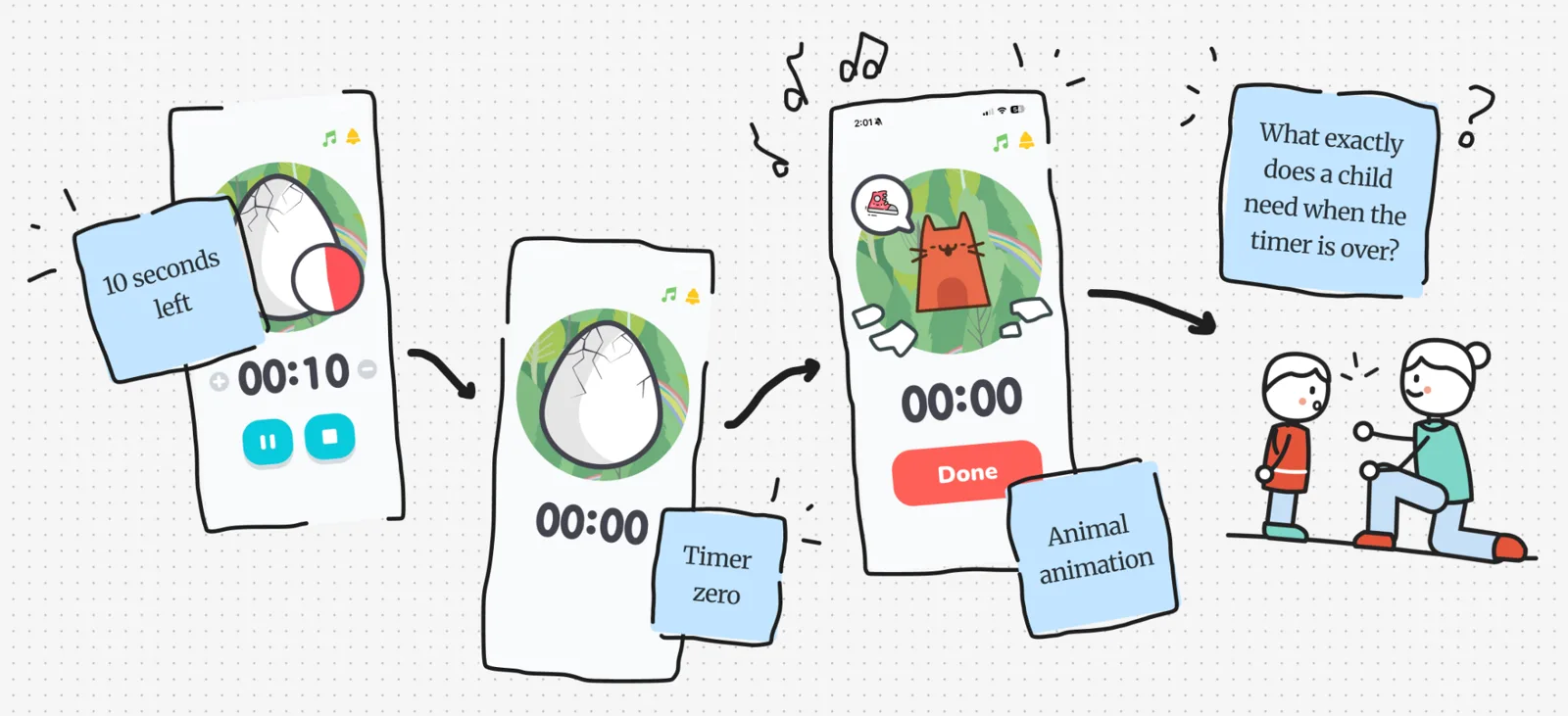
Elaine also talked about wanting a customizable way to cue what comes next. Rather than giving direct instructions, she often prefers language that simply describes what is present in the environment. For example, instead of "Time to go", she might say, "Your shoes are here."
This made us wonder: What exactly does a child need when the timer is over?
If reaching zero means the child needs to stop what they are doing, regulate, move away, and begin the next activity, then perhaps the animal hatching marks the beginning of a multi-step transition rather than the end.
We'd like to learn more about how you use Little Timer, and what usually happens immediately after the alarm sounds.
If you have a story to share, leave a comment below or write to us at research@littlelabs.co. Thank you!

Get Little Timer
Free · No ads · No subscription


Related reading
Comments
Loading comments…